Redesigning the UConn Digital Media & Design Website
A responsive website redesign that makes it easier for prospective and current students to explore the UConn Digital Media & Design program, find resources, and understand available opportunities.
Role
Designer
Timeline
3 months (2025)
Skills
Visual design / IA
Team
Content, Design (me + 2), Dev
Making a complex program easier to explore
Problem
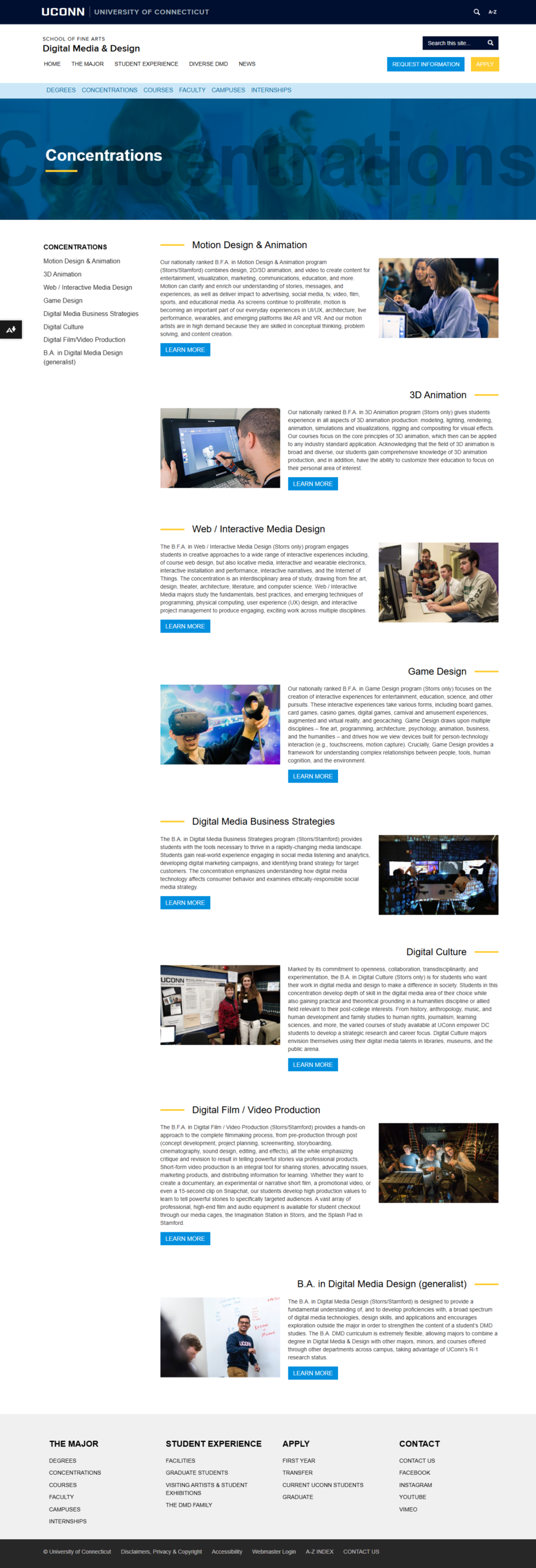
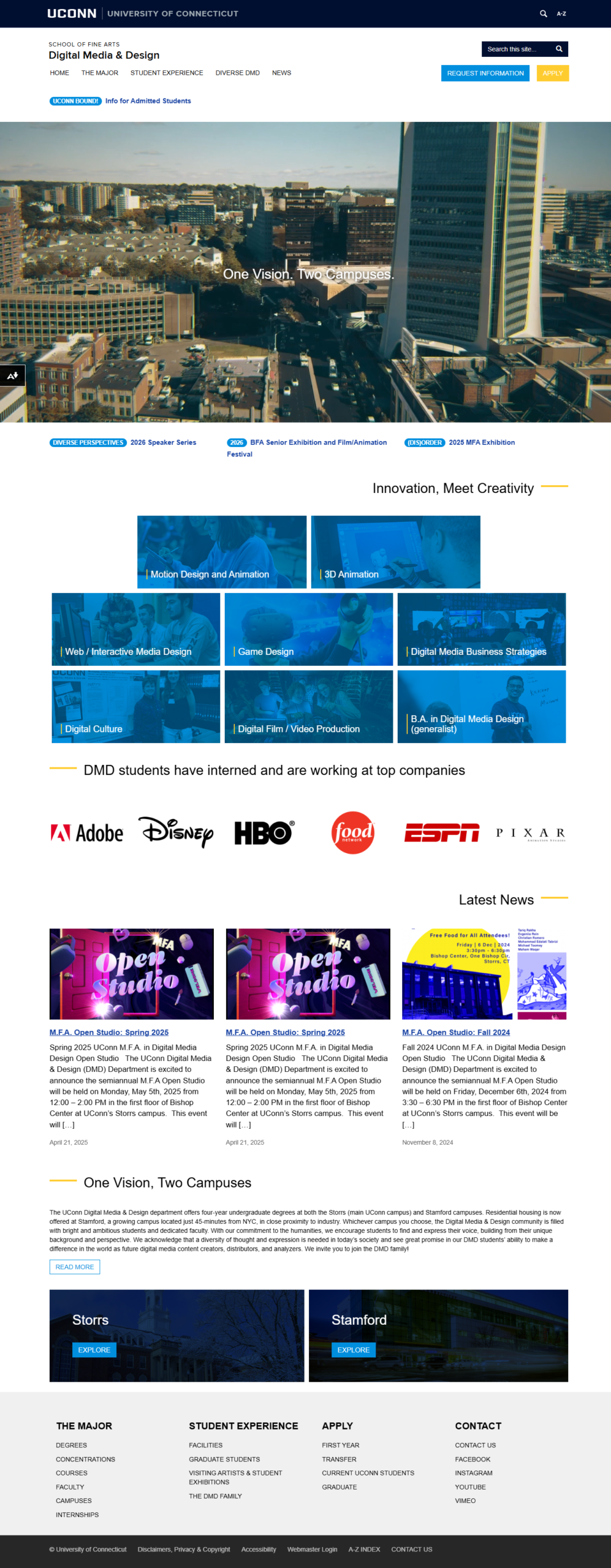
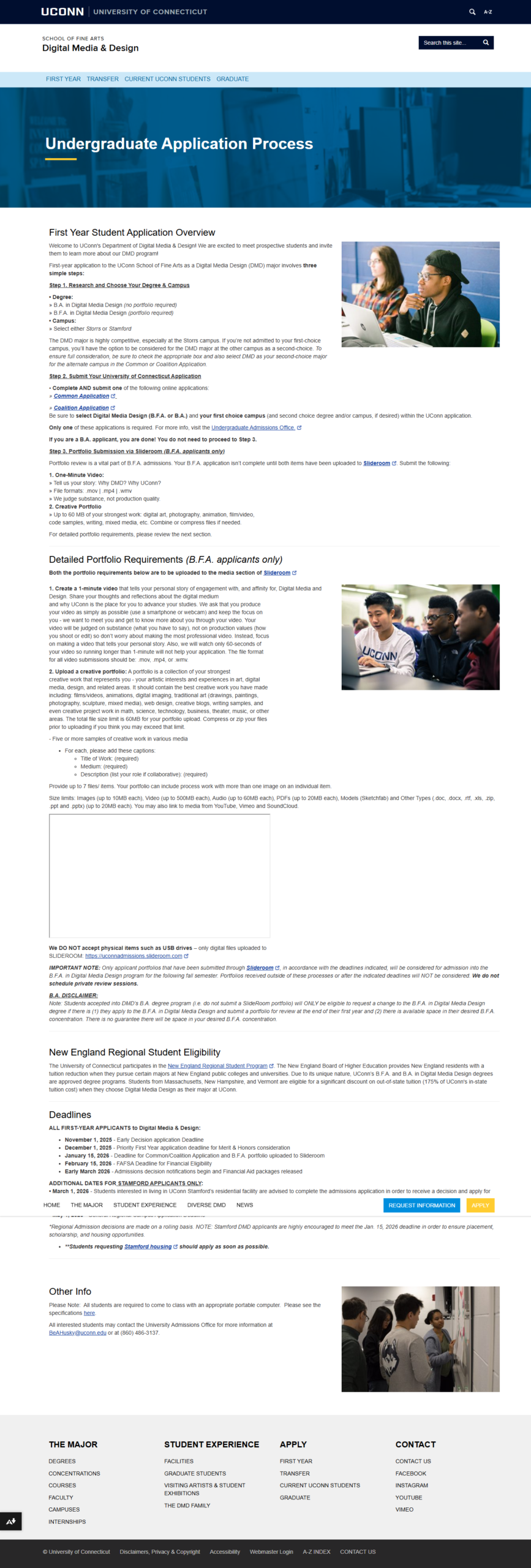
The existing website contained valuable information, but its organization and presentation made it difficult for visitors to understand the program and locate relevant resources. Our team redesigned the experience around the needs of prospective students exploring DMD for the first time and current students searching for academic information and opportunities.
Before
Creating a clearer information structure
Restructuring the Content
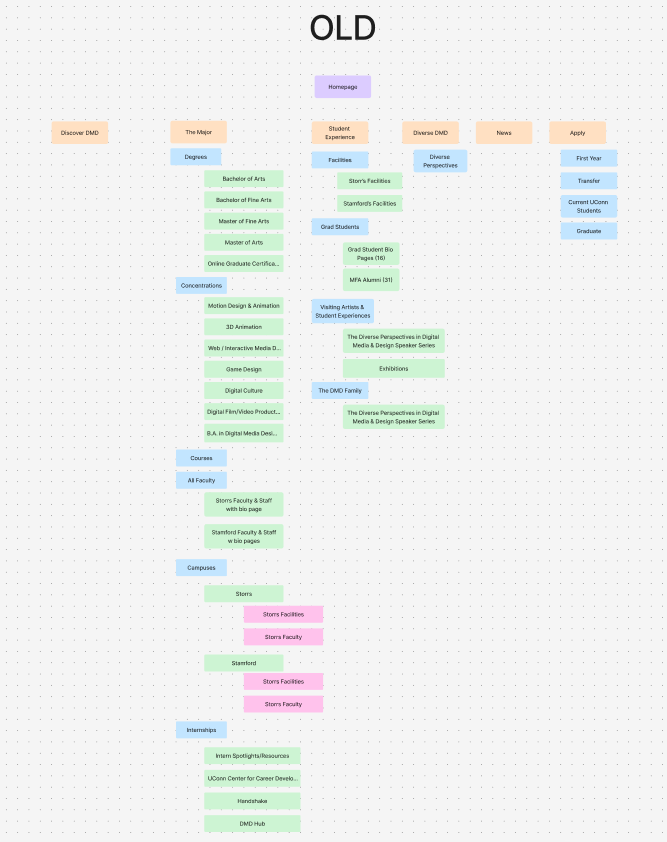
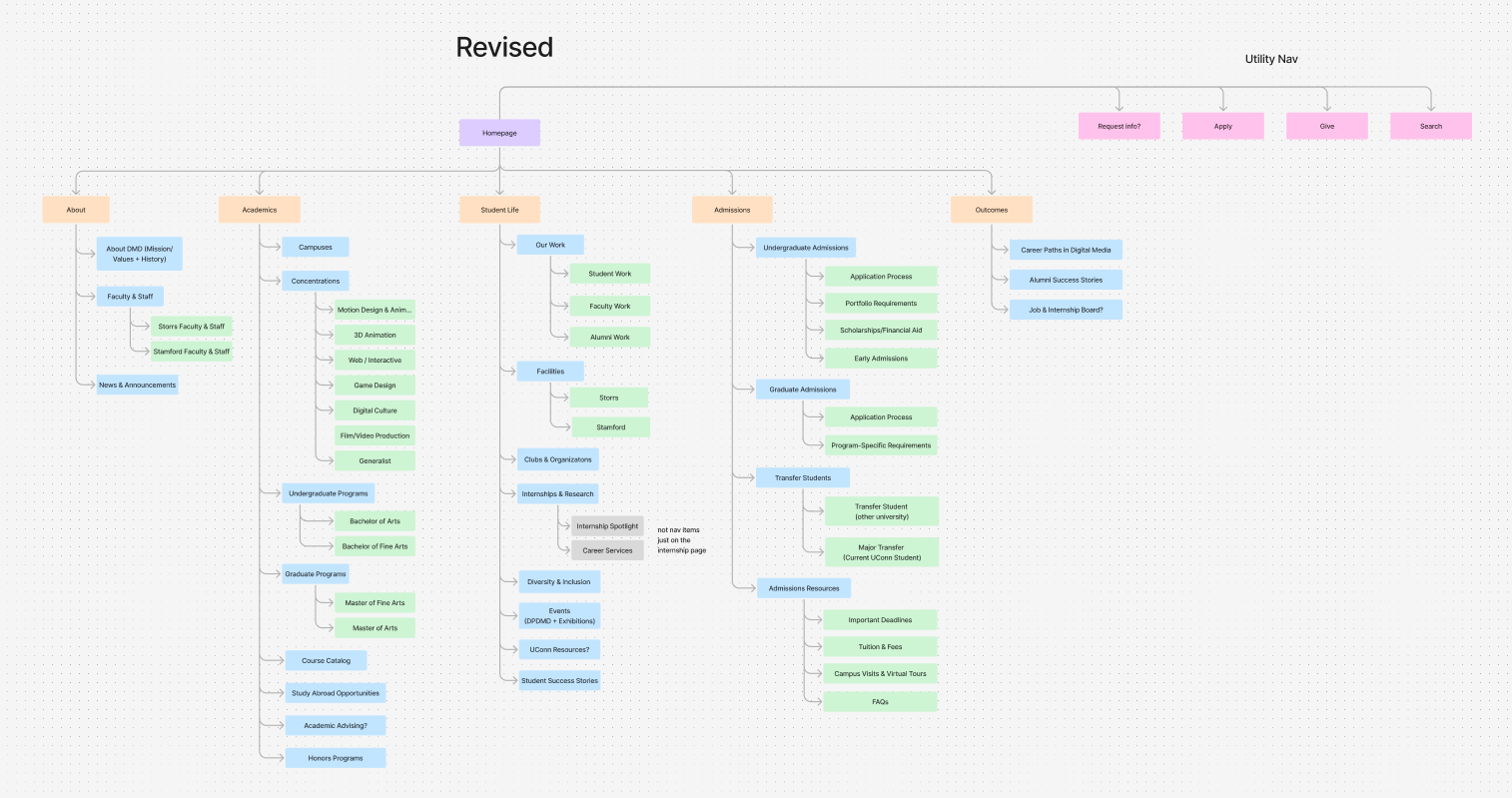
The full content of the existing website was collected and organized into headings, paragraphs, labels, links, and other content types. After reviewing the original site structure, we reworked the information architecture to group related information more clearly and create more predictable pathways through the website.
Previous information architecture
Revised information architecture
Learning from other design programs
Redesign goals
We reviewed other university art and design program websites to understand how they introduced their programs, presented student work, and organized academic information. We came out with a couple key takeaways.
1. Use stronger visual hierarchy on content-heavy pages
2. Create clearer calls to action for prospective students
3. Lead with student work and program identity
Typography and colors
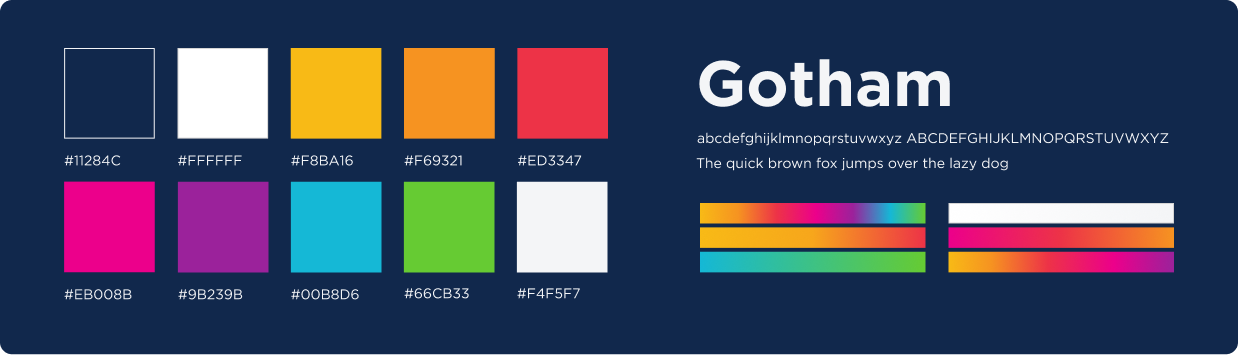
UConn’s official typography and colors were extended with DMD branding and a flexible gradient palette.
A flexible system for different types of content
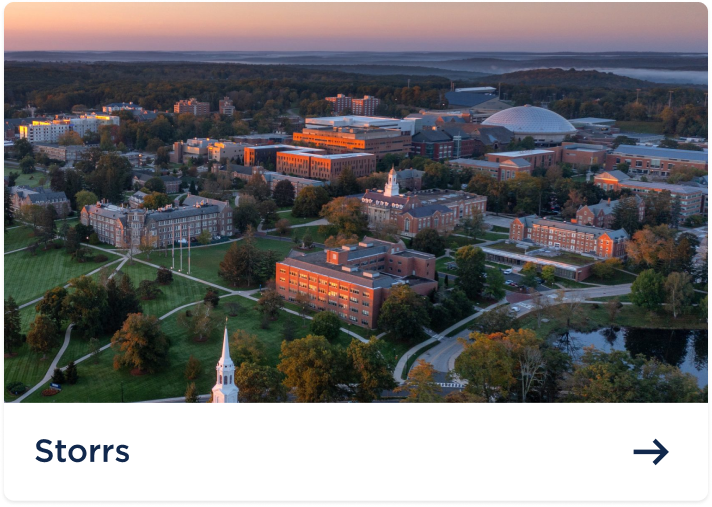
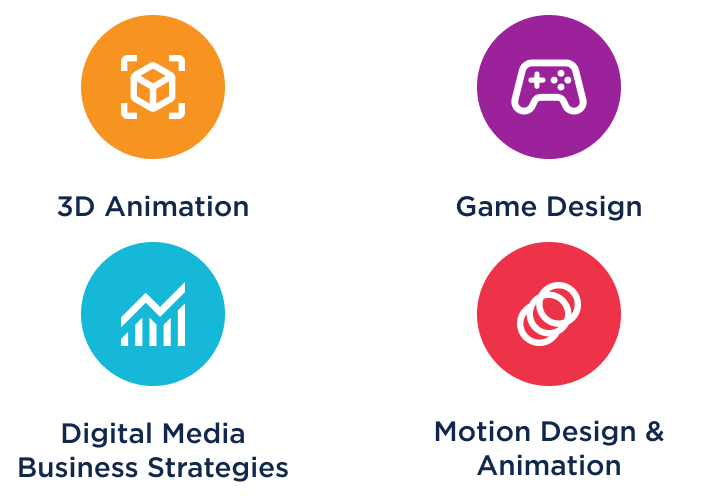
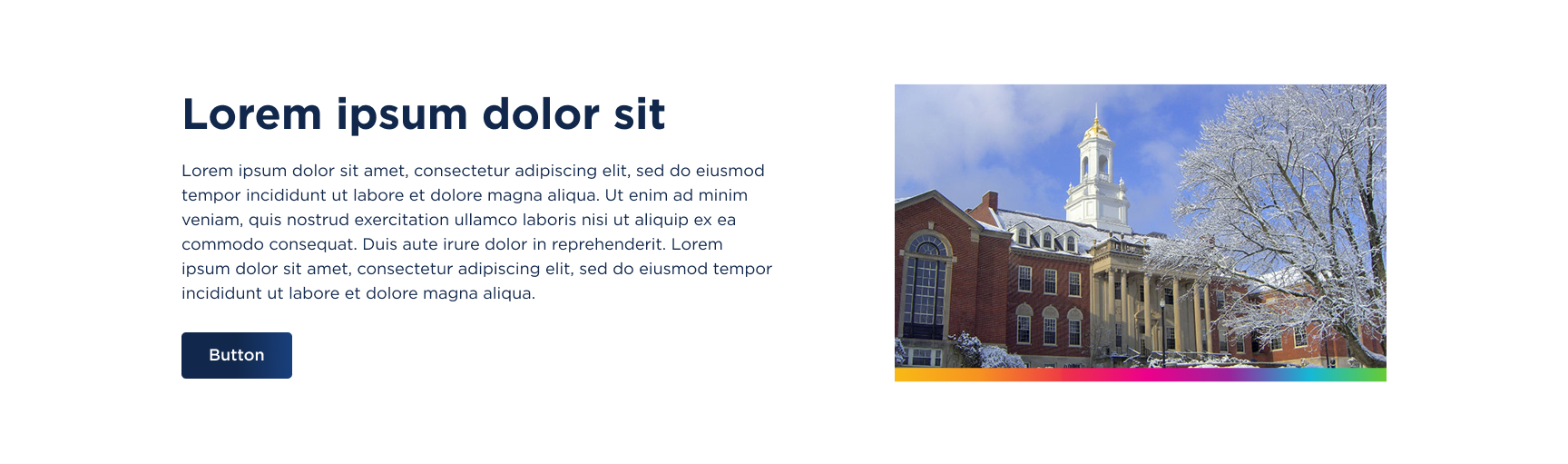
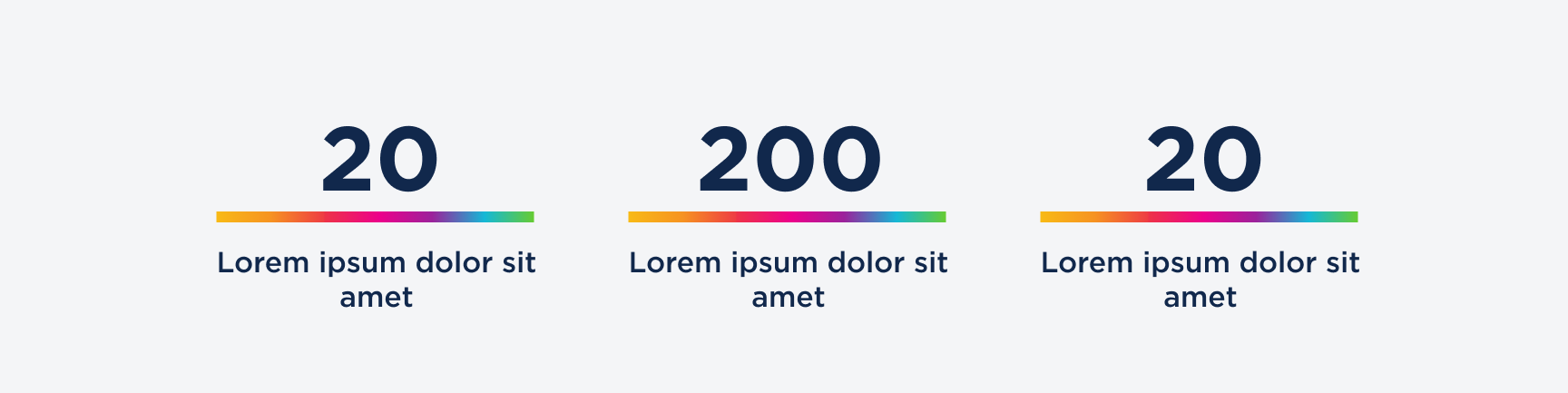
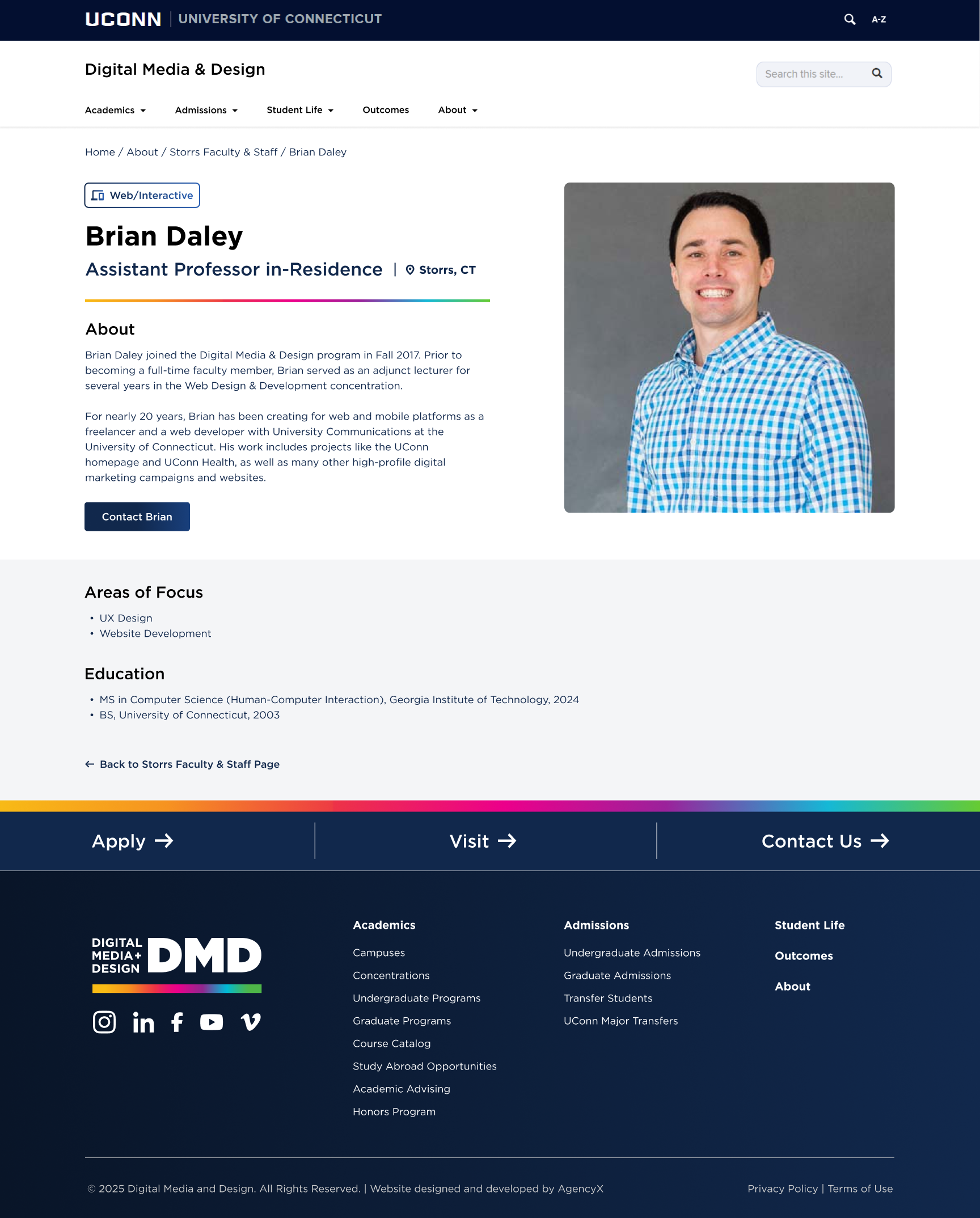
Because the website includes program information, student work, news, resources, faculty profiles, and opportunities, we created reusable content blocks that could support different page needs while maintaining a consistent visual language.

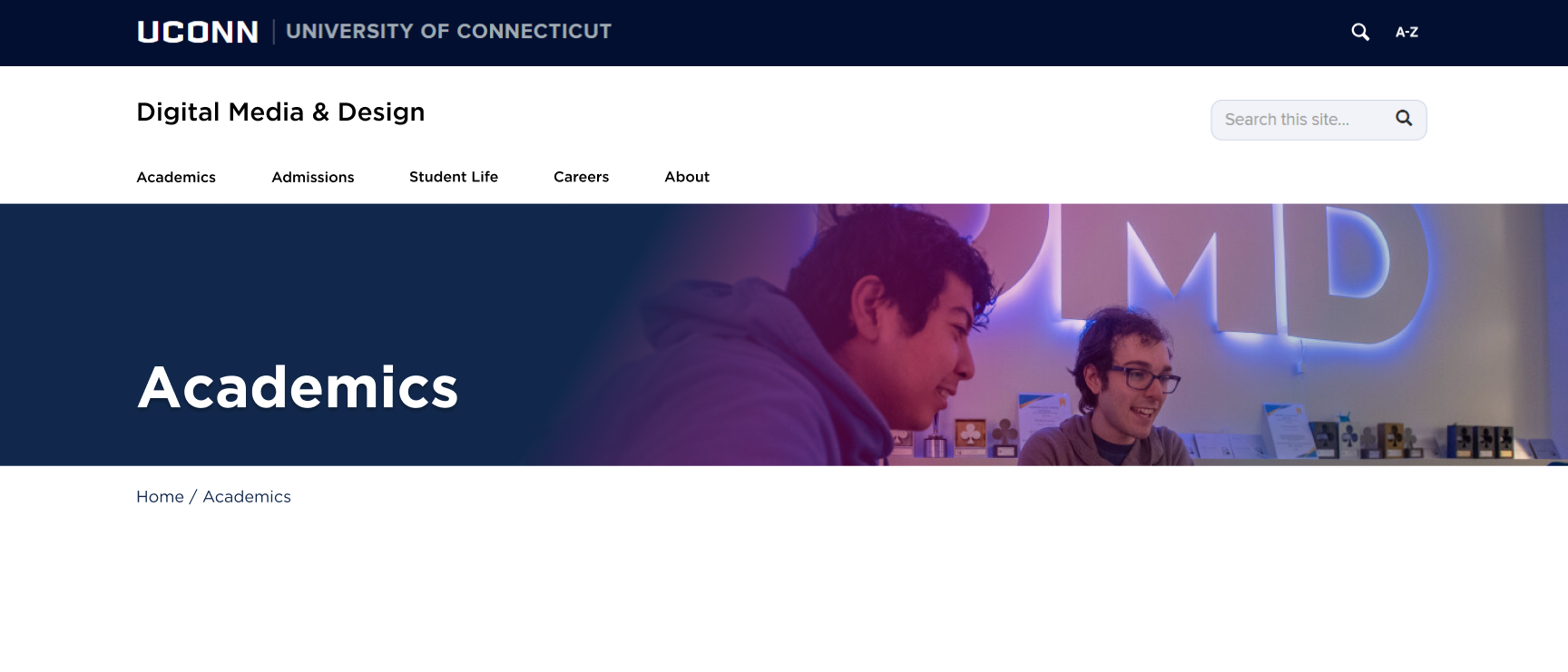
The redesigned experience
The after
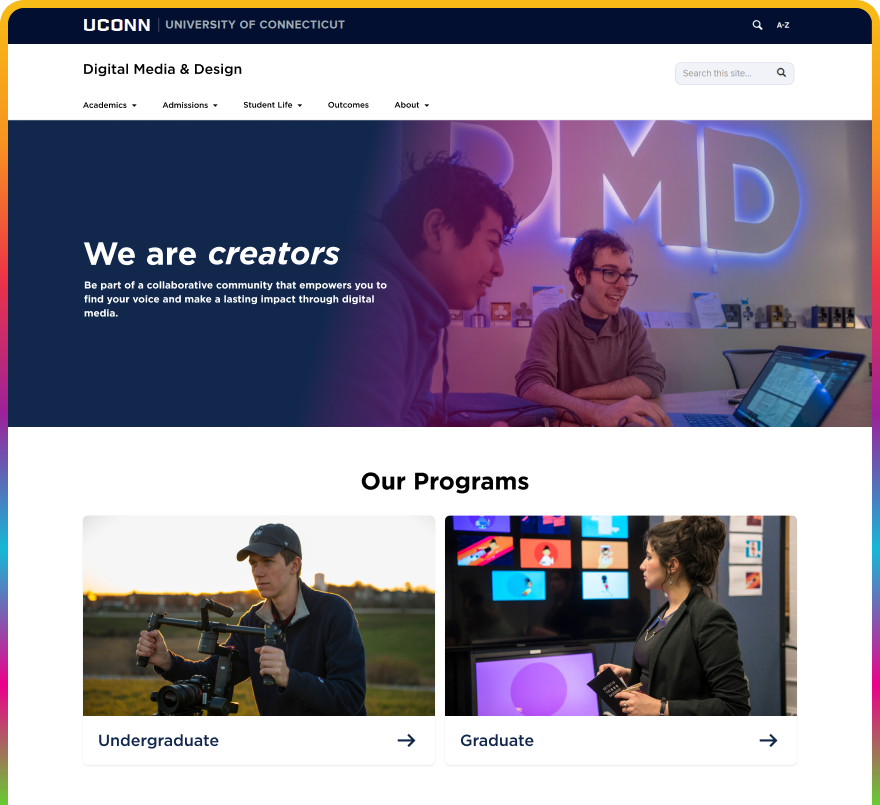
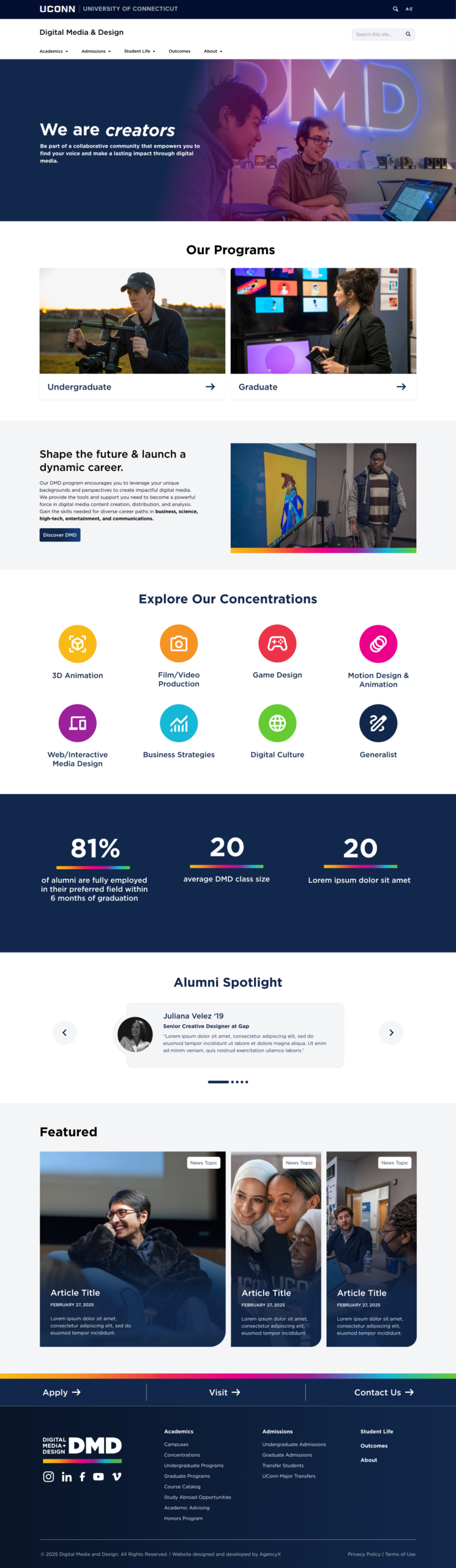
Home page
The redesigned homepage gives visitors a clear introduction to the DMD program, highlighting the program’s success through key statistics while keeping students connected to current news and events across the department.
Admissions page
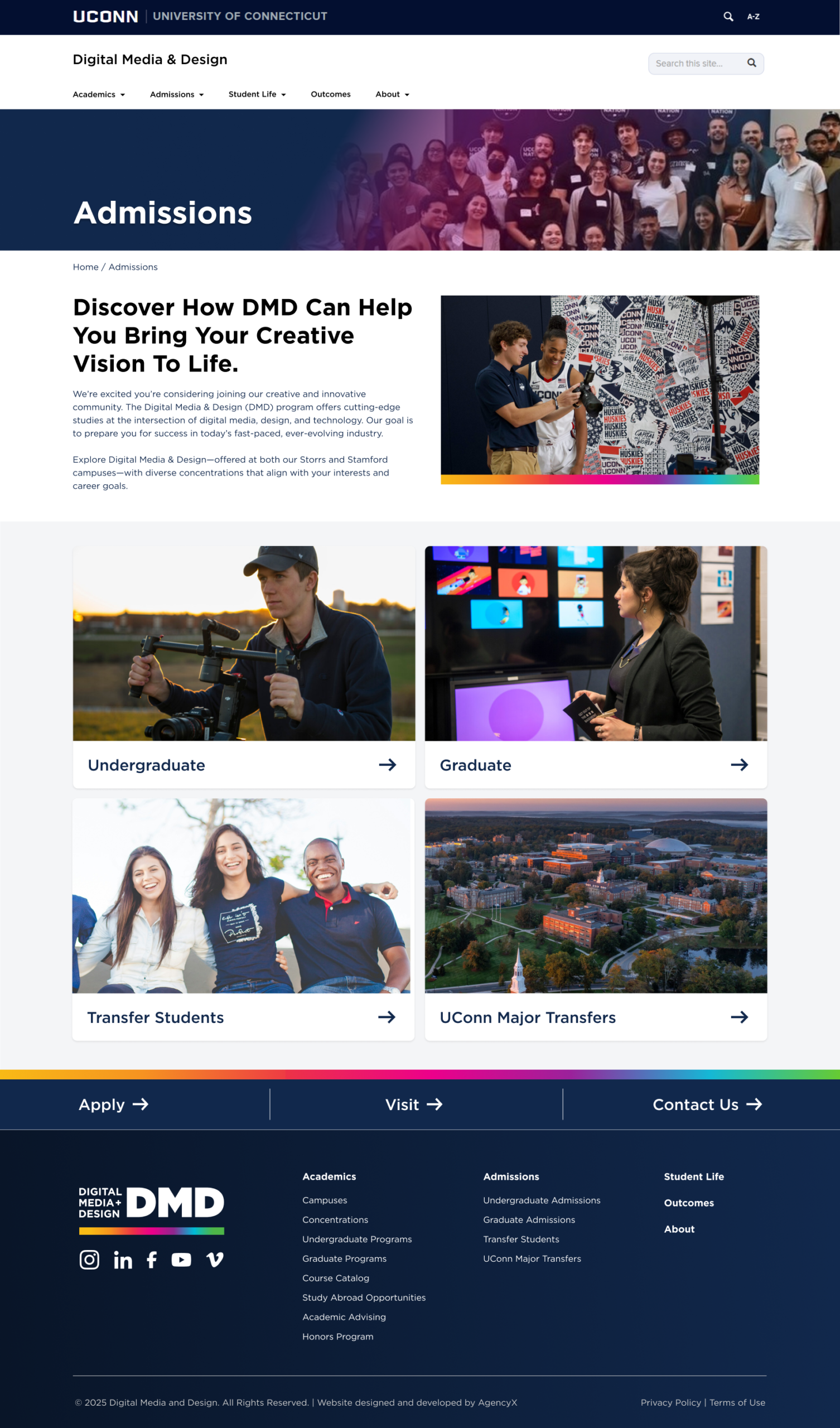
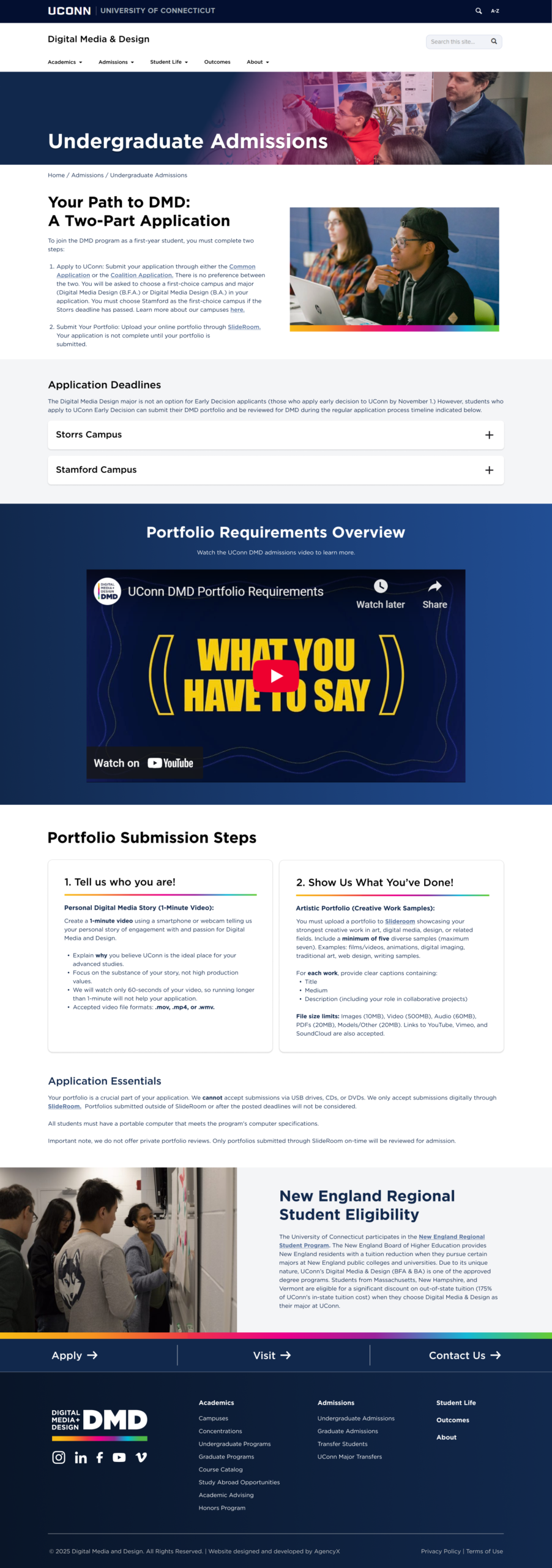
The admissions page was redesigned to give undergraduate, graduate, and transfer students clear pathways to the information and next steps relevant to them, reducing the need to dig through unrelated content.
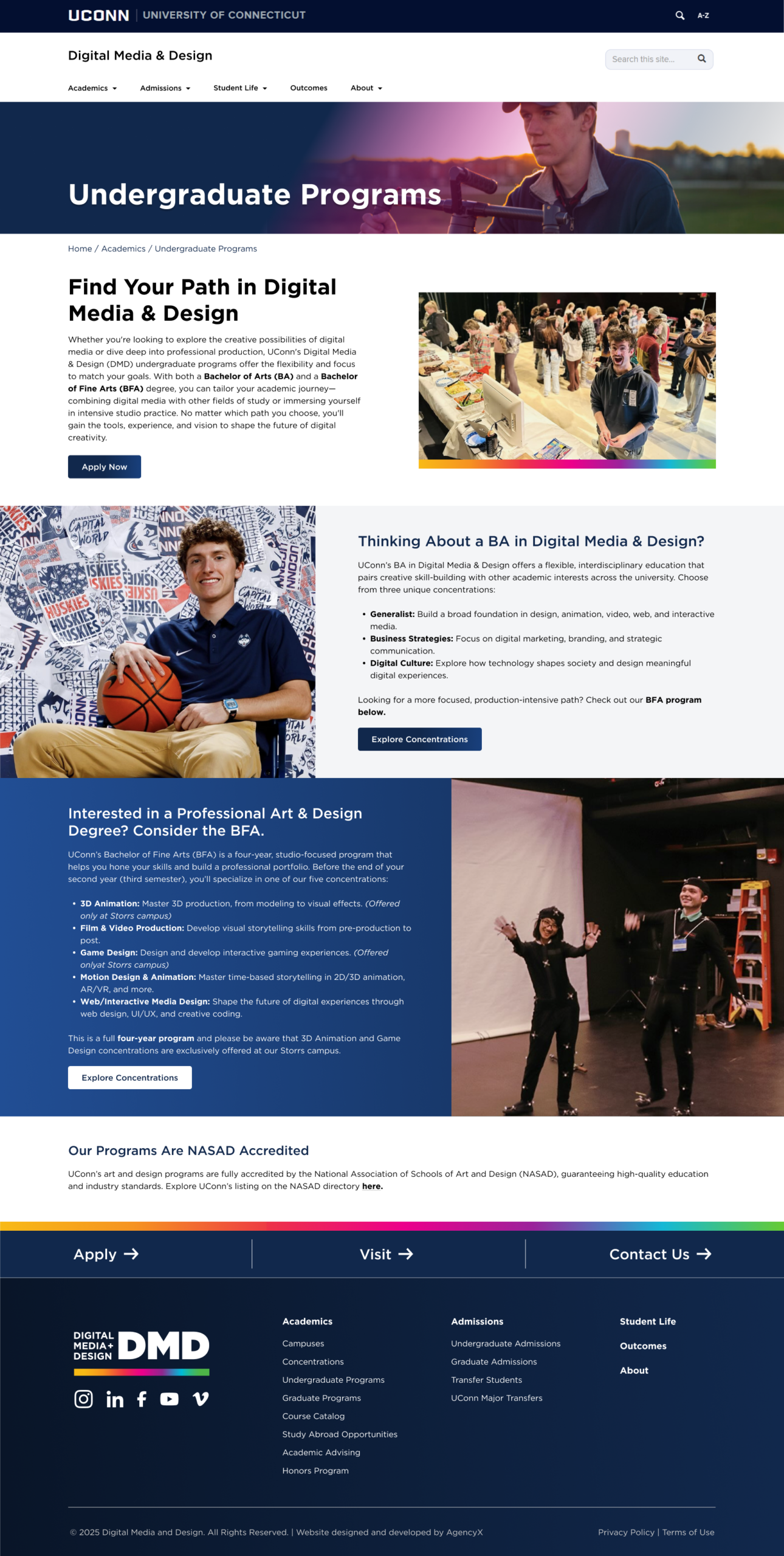
Academics page
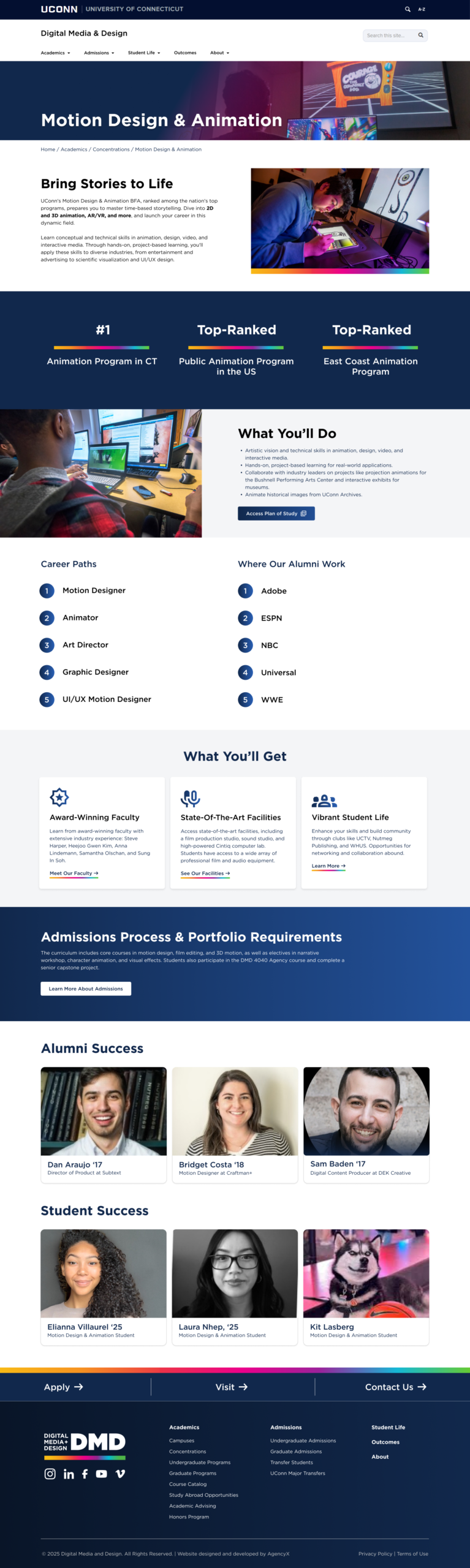
Contact
Reflection
What I learned
Working on this project gave me valuable experience collaborating across a cross-functional team while also working closely with two other designers. The three of us shared ownership of nearly every part of the design process, reviewing ideas together and pushing each other toward what we believed would create the best experience for students.
Because the project depended on multiple teams, we often had to wait for finalized copy and page content before beginning certain designs. At the same time, we had to consider what the development team could realistically implement within WordPress Aurora, UConn’s existing theme and content system. This taught me to think beyond the appearance of individual screens and design within real content, technical, and organizational constraints.
Unfortunately, the redesign was not implemented. UConn was transitioning between internal systems, and no other team was available to continue the project after our team’s term ended. To keep that transition manageable, the redesign was ultimately put on hold. Although it was disappointing not to see the work launched, the experience showed me that even strong design work can be affected by circumstances outside the design team’s control. It also reinforced the importance of adaptability, communication, and designing with implementation in mind.
Fin.