
Self-Directed Capstone
Product Design
FreshUp
Designed a hygiene app where pre-teens build habits with a virtual companion that grows alongside them.
Role
Designer & Researcher
Scope
Product Framing, UI/UX, Prototyping, AR Experiment
Duration
Sept 2025 - Feb 2026
Research
5 restrospective interviews + 1 usability session
Daily Tasks

Learn Hygiene

Shop with Happiness Points

Grow your Companion

Project at a glance
The Challenge
Pre-teens are gaining independence, but hygiene guidance can be inconsistent, awkward to ask for, and difficult to turn into routine.
Central Decision
Make accountability feel caring rather than punitive by linking completed routines to a companion’s care and growth.
Strongest Evidence
Five retrospective interviews surfaced inconsistent learning, embarrassment, forgetfulness, and a desire for greater autonomy.
Outcome
A testable product loop combining self-guided education, customizable routines, rewards, and companion care.
Hygiene is often treated as common sense. Building it into routine is not
Pre-teens are beginning to manage personal care more independently, but the guidance they receive can be inconsistent, awkward to ask for, and difficult to translate into daily behavior. FreshUp explores how self-guided education and gentle accountability could help young users build confidence without shame or pressure.
Research Signal
Because direct access to pre-teens was limited, I conducted five retrospective interviews with young adults about their hygiene experiences ages 10-13. Across parents, school, dentists, peers, media, and trial and error, participants described inconsistent guidance, embarrassment, forgetfulness, and weak accountability.
I paired this with secondary research and one target-age prototype test. These inputs shaped the direction, but they do not prove lasting habit change.
Design Question
How might FreshUp help pre-teens practice hygiene more independently without making the experience feel clinical, childish, or punitive?
Decision 01 - Make accountability feel like care
Research Signal
Research suggested that information alone would not address forgetfulness, limited accountability, or the discomfort of asking for help.
Decision
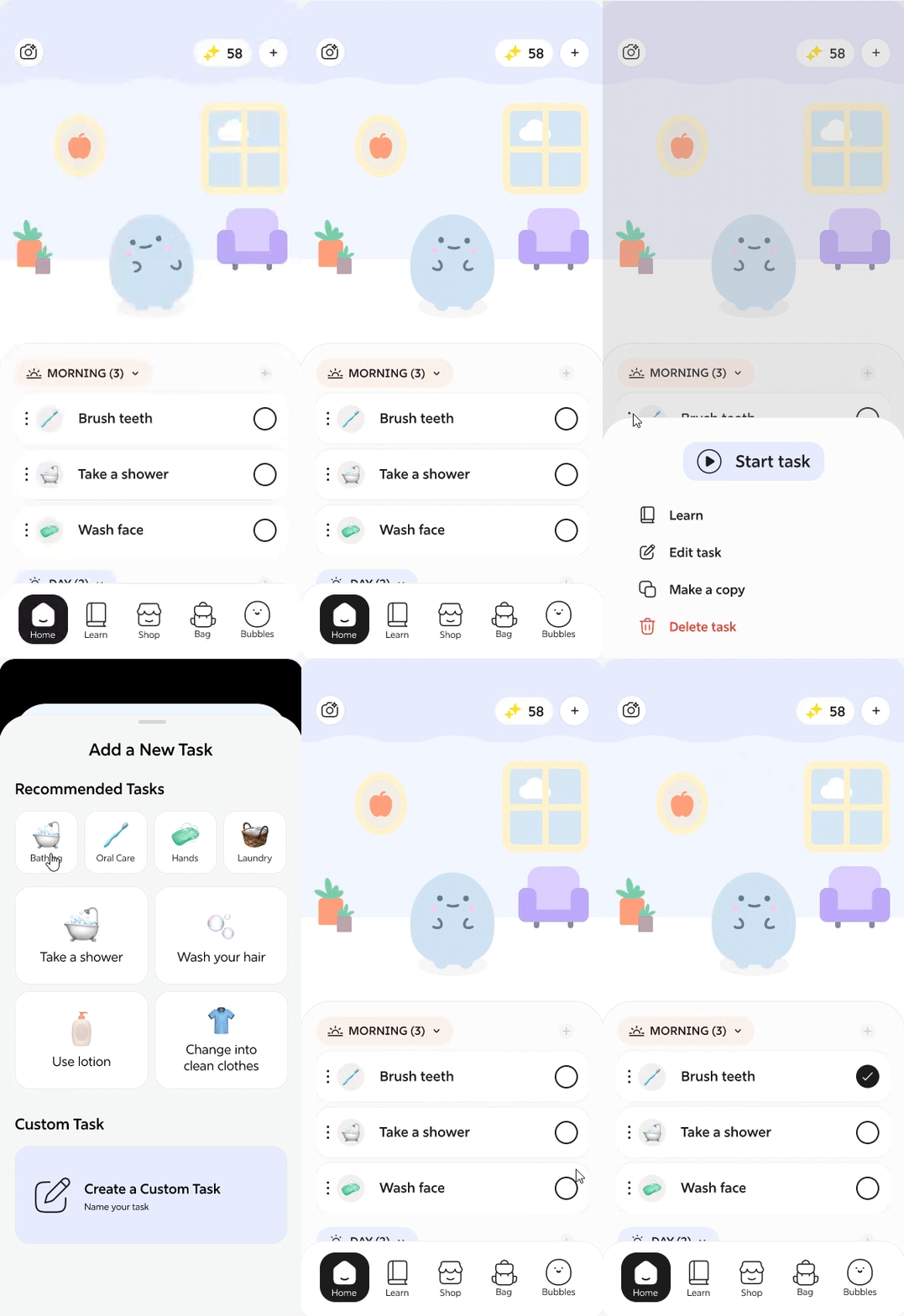
I connected daily routines to the companion’s care. Completing a task earns Happiness Points and changes the companion’s state, while short learning content explains why each routine matters.
Effect
Education and follow-through support the same goal: helping users practice independently.

Decision 02 - Let the companion carry the feedback
Why it Mattered
A conventional streak or score would make FreshUp feel like another tracker and separate progress from the product’s emotional hook.
Decision
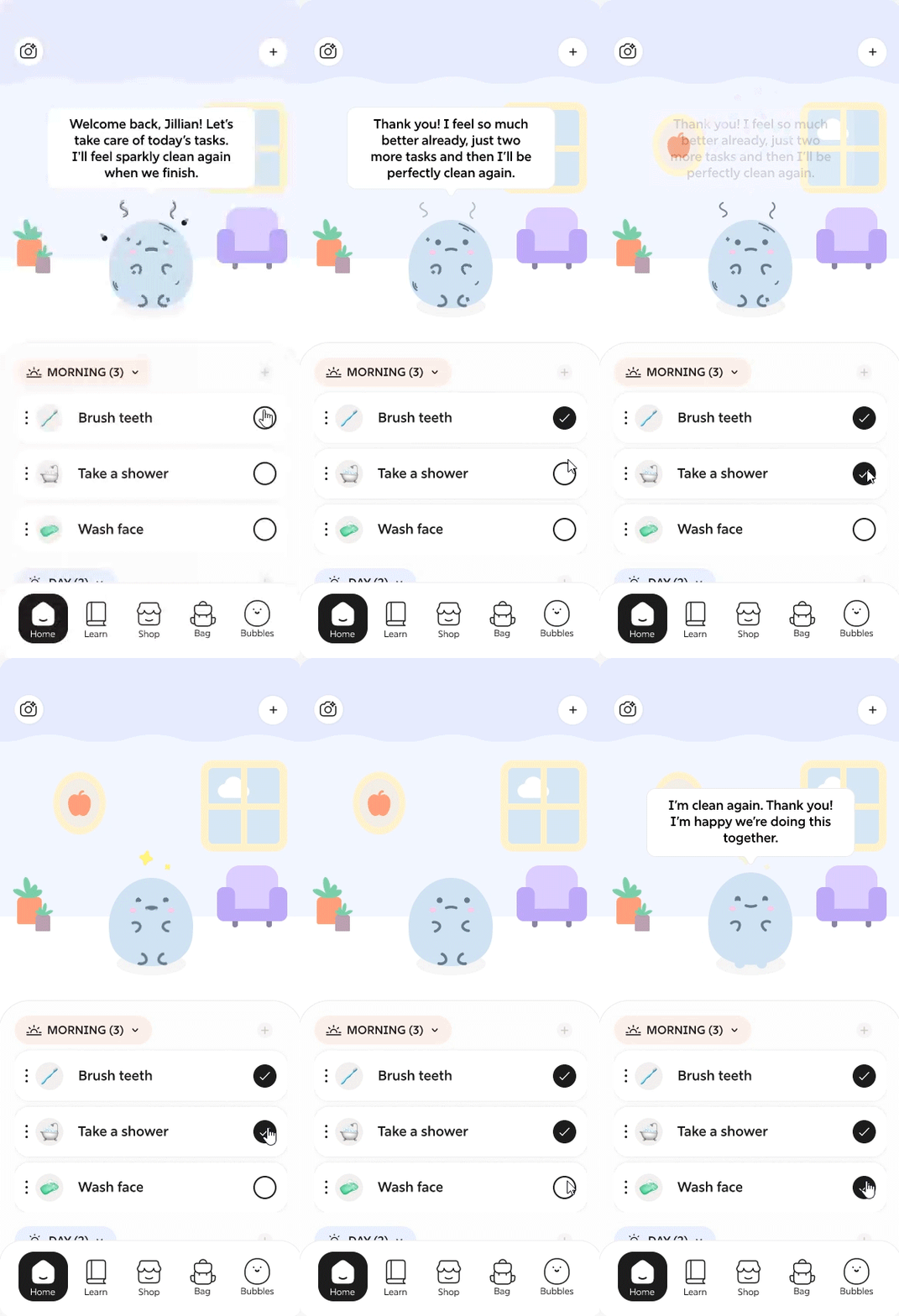
The companion changes state as the user completes routines and earns Happiness Points. Care, expression, and customization make progress visible without relying on a dashboard alone.
Return State
The companion responds to the user's absence, and the follow up is easily doable to ease pressure on user.

Decision 03 - Prototype the riskiest idea
Why it Mattered
The companion was FreshUp’s most distinctive assumption. If it did not feel present or rewarding, the concept would lose its emotional center.
Decision
I built a working AR experiment to explore whether the companion could extend beyond the main app experience.
Learning
Peer feedback suggested that the AR experience was delightful, but it did not yet justify further investment. Making it meaningfully engaging would require more animation and target-age testing, while the core routine-and-companion loop was still unresolved. I paused AR development and prioritized strengthening the main product experience first.
What I learned from early testing
One session with an 11-year-old is an early usability signal - not evidence of long-term habit change.
Observed
The participant completed the prototype and described it as fun and easy to use. Tasks, customization, and the companion-supported return state stood out.
Next Test
Test the routine loop with more children over time, evaluate whether companion states motivate without guilt, and involve guardians or safeguarding experts.
What I learned from working independently
Turn Ambiguity into Something Testable
I began with a broad subject - pre-teen hygiene - and narrowed it into a behavioral hypothesis: gentle accountability through companion care could support independent follow-through. Framing the problem gave me something concrete to design and evaluate.
Stay Unattached to the First Solution
I revisited and rebuilt flows whenever feedback or closer review showed they were not working, even late in the process. I learned to prioritize the strength of the experience over preserving work simply because it was already polished.
Test Earlier - and Claim Only What the Evidence Supports
The usability session showed early appeal and comprehension, but not lasting behavior change; testing the routine-companion relationship over time would be my next priority.
Learn What the Idea Requires
I had no previous animation experience, but taught myself AI-assisted animation and AR prototyping to explore how the companion could feel more alive. I do not wait for complete mastery before starting - I learn enough to build, test, and decide whether an idea deserves further investment.